By David Newton, Public Programs, Museums Victoria.
28 November 2025
Sixty years ago this month, on 2nd December 1965, Melbourne’s first planetarium opened as a public venue dedicated to and in response to a growing interest in astronomy and space exploration. Located in central Melbourne on the first floor of the Institute of Applied Science of Victoria - later the Science Museum of Victoria - the new attraction occupied part of the Swanston Street building shared with the State Library of Victoria and National Gallery of Victoria.

Desirable, Feasible and then Viable
As early as 1943 there was interest in a planetarium for Melbourne, but it was not until 1960 that the efforts of a number of parties converged to make it feasible and then ultimately viable.1 An overseas tour was commissioned by the Institute Trustees to identify a suitable option, and a final recommendation was made for a planetarium more modest in scale and cost than earlier envisaged. Design plans were drawn up in 1962 but the costs proved prohibitive. The Trustees could only provide a fifth of the total funds required and the project seemed stymied. However, the project’s viability and ultimate success was ensured by a substantial grant by the Sunshine Foundation (established to honour the significant industrial and agricultural legacy of H V McKay), along with a small donation from Carlton & United Breweries.
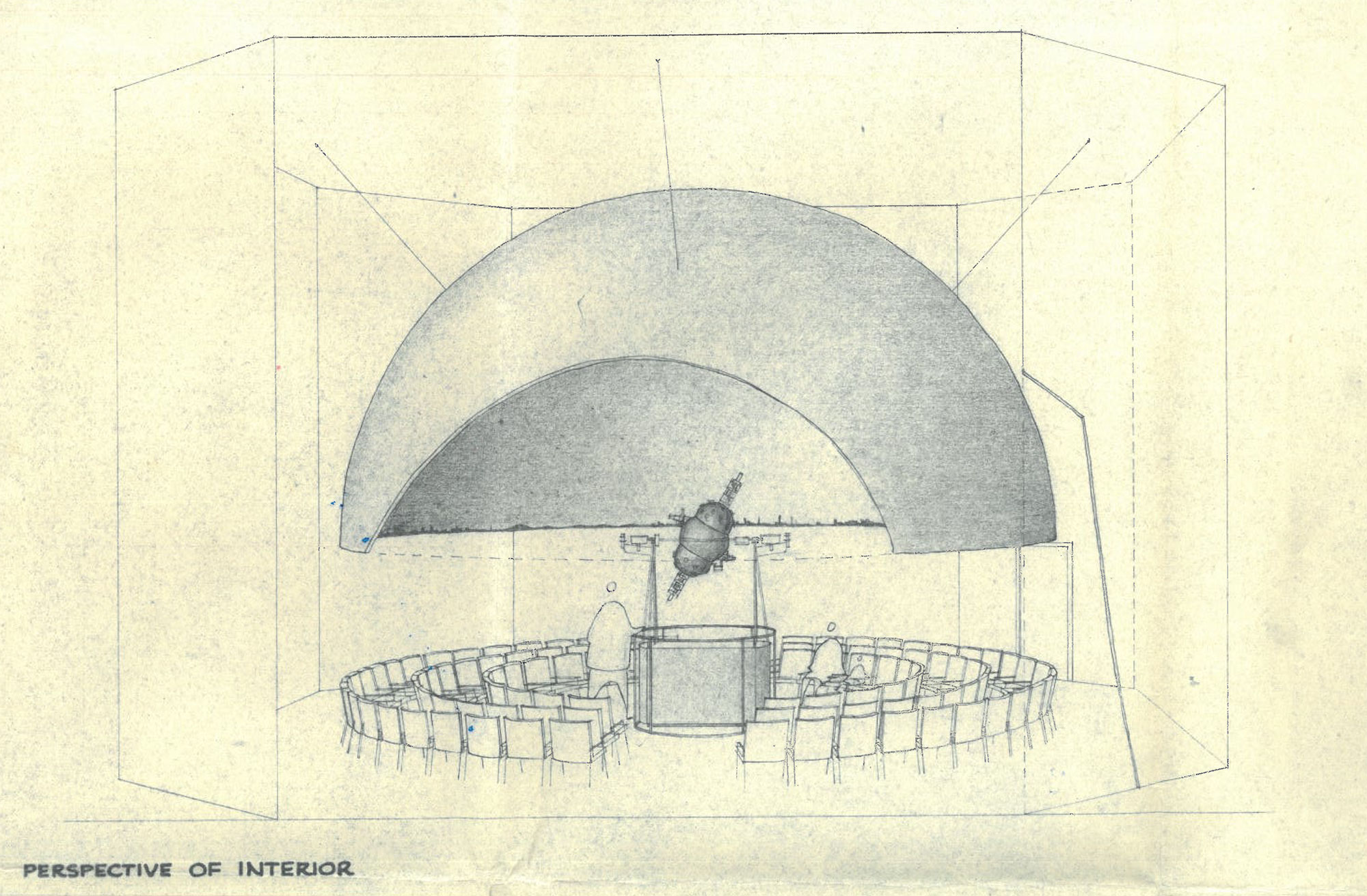
In 1964 construction began on a new integrated extension to the Queens Hall to accommodate the planetarium, ticket booth, office and storage area, and related exhibition gallery. Work was carried out or overseen by the State Department of Public Works. A reinforced fibreglass and steel-framed dome of 37 segments suspended free of the walls was fabricated by the Commonwealth Aircraft Corporation in Port Melbourne2, and the Kayagnitsu Corporation of Japan was awarded the contract for a GOTO Optical Manufacturing Corporation Medium M-1 Projector and its associated systems. Under supervision of a Japanese technician from GOTO3, the installation, testing and training was complete, and with chairs donated by the Capital Theatre and carpeting from Westminster Carpets4, the new attraction was ready. It officially opened on 2nd December 1965 at a ceremony and show for invited guests, and then to the public just in time for Christmas and the summer school holidays.
Realism and storytelling
For the first time, visitors could experience precision simulations of the night sky and celestial phenomena, and satisfy their curiosity and educational needs in a way previously available only to those in metropolitan centres overseas. This was at a time of growing public awareness of research, discoveries and exploration in the rapidly developing Space Age. In its first year, the venue attracted 52,000 visitors. In keeping with its educational mandate, its commonly served 1000 students each week from a wide variety of schools. During its operational life, the planetarium manager, programmer, operators, and an education officer seconded from the Victorian Education Department, ran a program of regular night sky shows. However, it was soon realised that a straightforward night sky presentation was not enough to hold audience attention, and scripted themed shows were produced, including some adapted under licence from overseas planetariums. Woven into a special night sky session, especially in the planetarium’s later years, were a variety of topics reflected by titles such as; Death of the Dinosaurs, Is Anybody Out There?, The Star of Bethlehem, Comet Halley, The Moon is Not a Balloon, Comets: Vagabonds of Space, Clockwork Universe, Cosmic Catastrophes, and Our Place in Space.
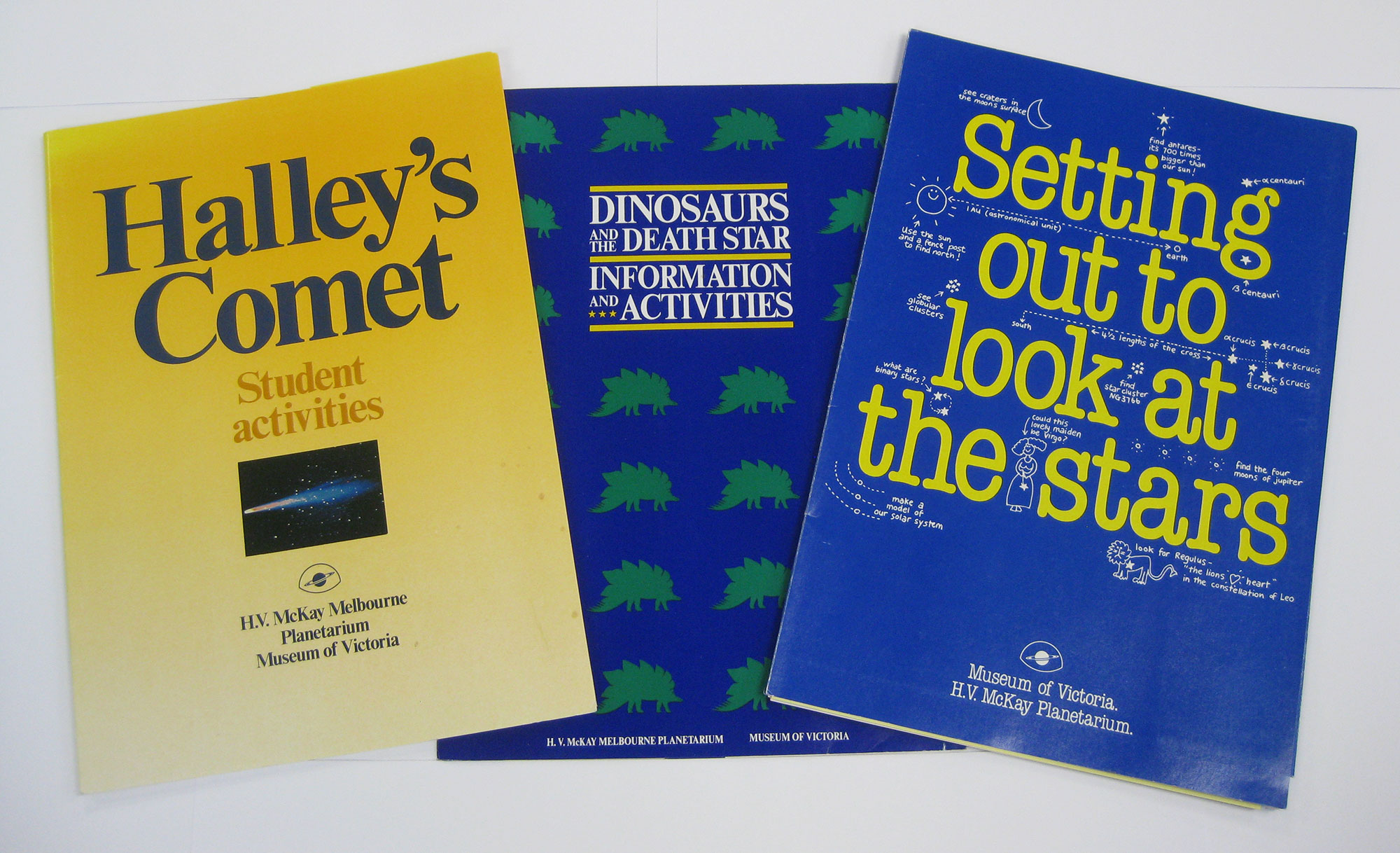
The planetarium program supplemented and supported the Institute’s and later Science Museum’s education program and public exhibitions covering the Sun, moon and planets, comets, lunar and solar eclipses, rocketry and astronautics, the developing American and Soviet space programs, early lunar and planetary probes, and the Apollo moon landings. As an institution in the pre-internet age it produced printed resource material, including public information sheets and education kits for students and teachers.
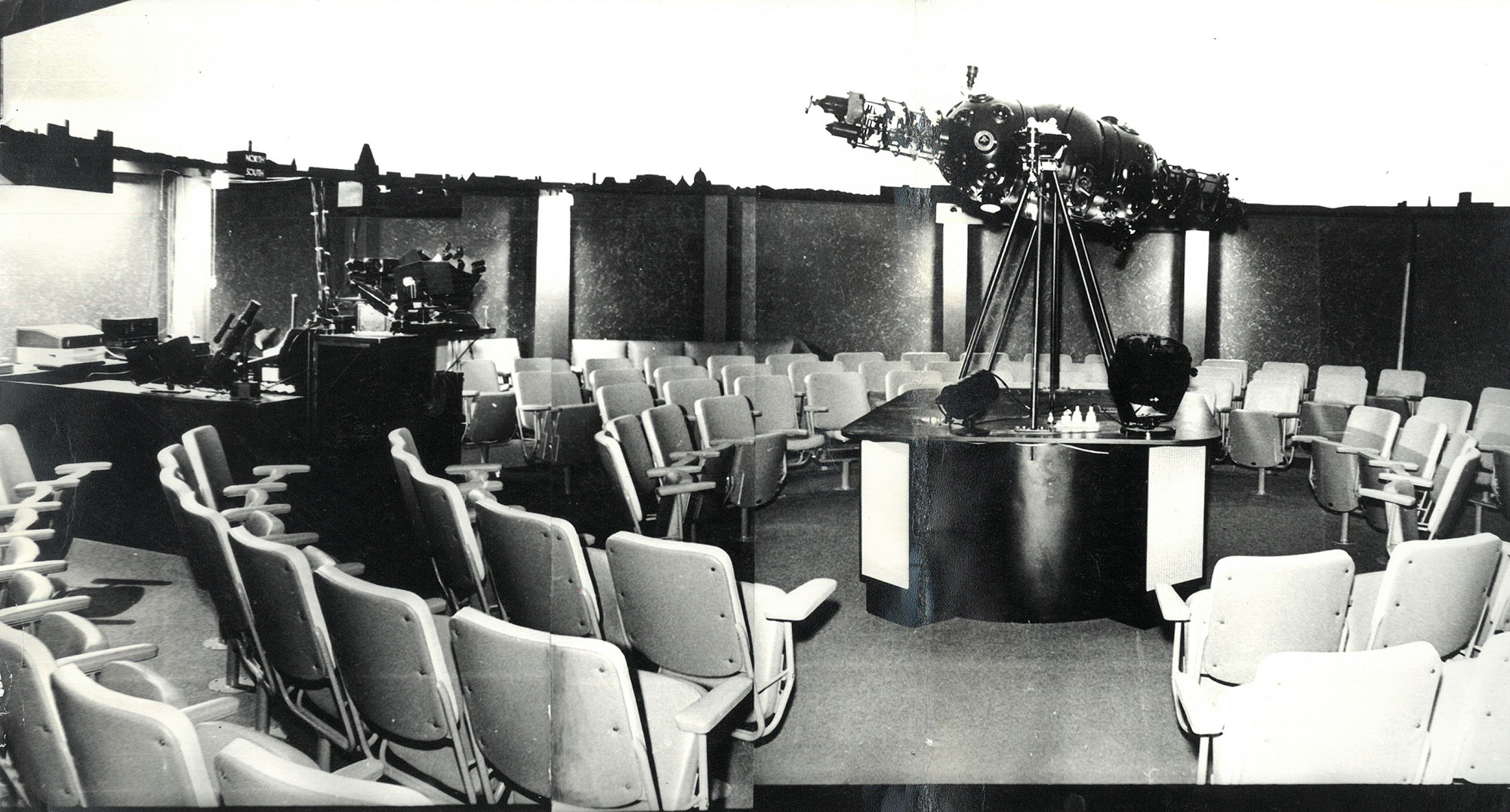
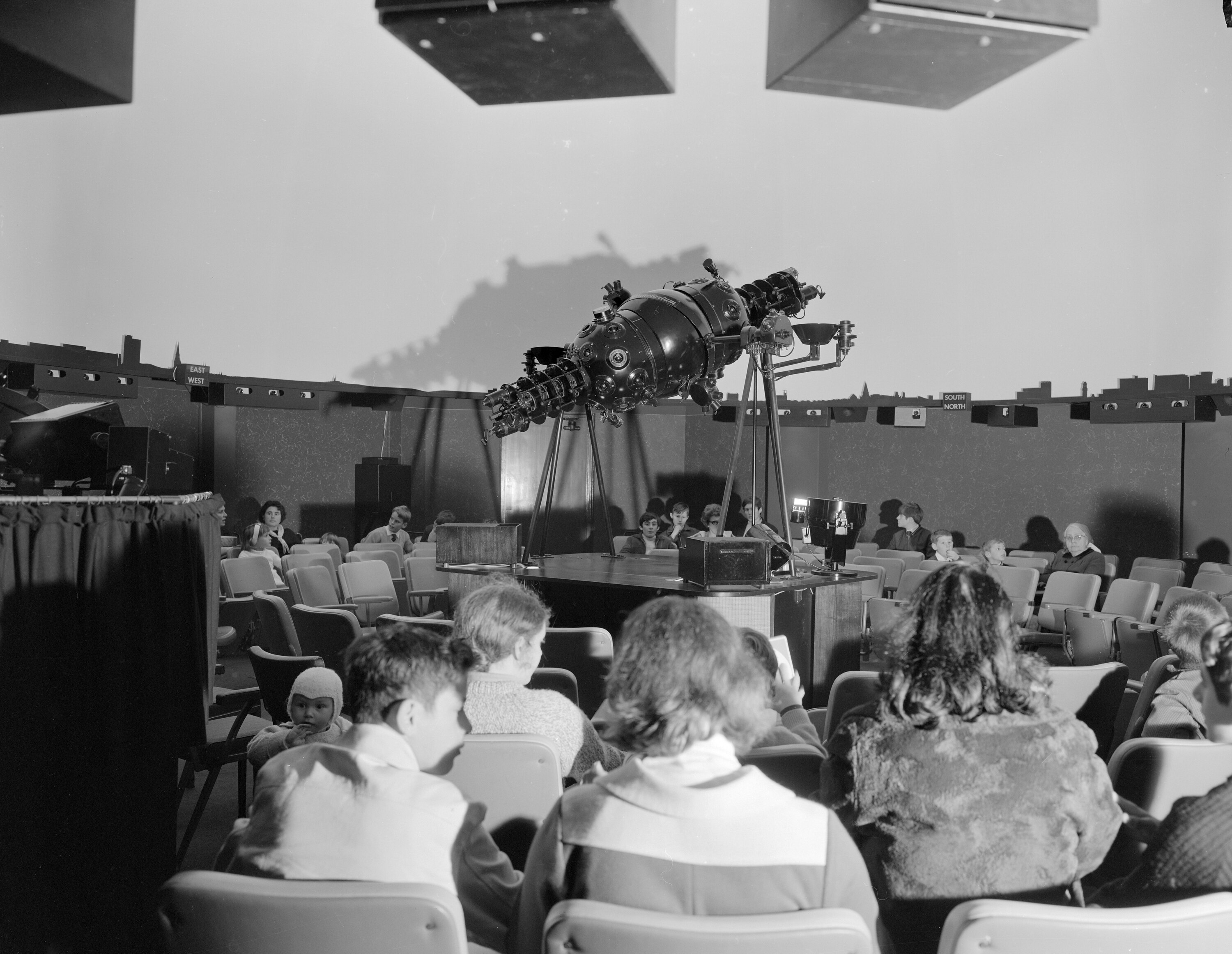
Constructed as a first-floor extension over the internal south-west courtyard of the building, the H V McKay Planetarium was reached through the Queens Gallery. Once inside visitors were greeted by a central Japanese GOTO Medium Model M-1 projector standing on two tripod supports under a dome 2.2 metre high and 10 metre wide. The GOTO displayed both northern and southern hemispheres to provide the entire night sky. Its 34 focussing lenses fitted with apertures would, as the projector moved or rotated, open and allow light from its internal lamps to pass through finely etched discs giving sharp images of stars or other phenomena on the dome above. A number of auxiliary projectors simulating meteors, comets, satellites, aurora, rainbows, eclipses, constellations, lightning, and planetary motion were located around the dome or at the control console. They added their own effects as did multiple slide projectors placed out of sight around the dome.6
A ‘night under the stars’ to remember
Rows of circular seating gave a capacity of 117 with the operator console located to one side. Public shows were largely live and could display around 5000 stars visible to the naked eye (typically up to 6th magnitude in dark sky conditions). Sessions could cover sunsets and sunrises, clouds, seasonal constellations, the progression and retrograde motion of planets, the moon’s motion and lunar phases, Earth’s diurnal and annual motion, precession, changes of latitude, the band of the Milky Way, comets, satellites, major nebulae and star clusters, and solar and lunar eclipses. Commentary, music and sound effects enhanced the visitor experience. Shows typically began by simulating dusk with a city skyline panorama followed by twilight fading into full night. A session often took visitors through to sunrise the next morning. Sessions were often themed and often captured topical events. Use was made of multiple slide projectors, turntable audio and later reel-to-reel tape and cassette tapes, and even 8mm or 16mm movie projection.
Apart from repainting, recarpeting, and a remodelled entrance foyer in the 1970s, entering the computer age, the planetarium received multi-projection automation in 1984 and improved stereo audio in 1993. During its operational life the H V McKay made necessary upgrades to take advantage of new projection technologies, presentation styles and visualisation techniques. That evolutionary development through innovation, imagination and creativity has continued to challenge planetariums, especially in the modern digital age.
No Smoking!
At the time the H V McKay was compared with the famous London Planetarium (which closed in 2006), and Chicago’s Adler Planetarium and New York’s Hayden Planetarium, both of which continue to this day. Melbourne’s first planetarium was the first fully optical large-scale planetarium in Australia, and the then largest in the Southern Hemisphere. Unusually, for the time, it opened as a designated “no smoking” venue, unlike cinemas, theatres and other public auditoriums where such prohibitions only began in 2001 before becoming widespread by 2007.
Initially, the planetarium ran three afternoon sessions each weekday and one evening mid-week show. Tickets were very affordable at 2, 3 or 5 shillings (20, 30 or 50 cents once decimal currency began in February 1966). Children were half-price and those under 5 years not admitted.7 After a period of ‘settling in’, it was expected morning sessions would be added for holidays, but there was no capacity at that stage to run sessions at weekends. In its first year, it appears that limited funding required all Institute staff to be rostered once a week to help collect tickets and supervise visitor entry and exit.8
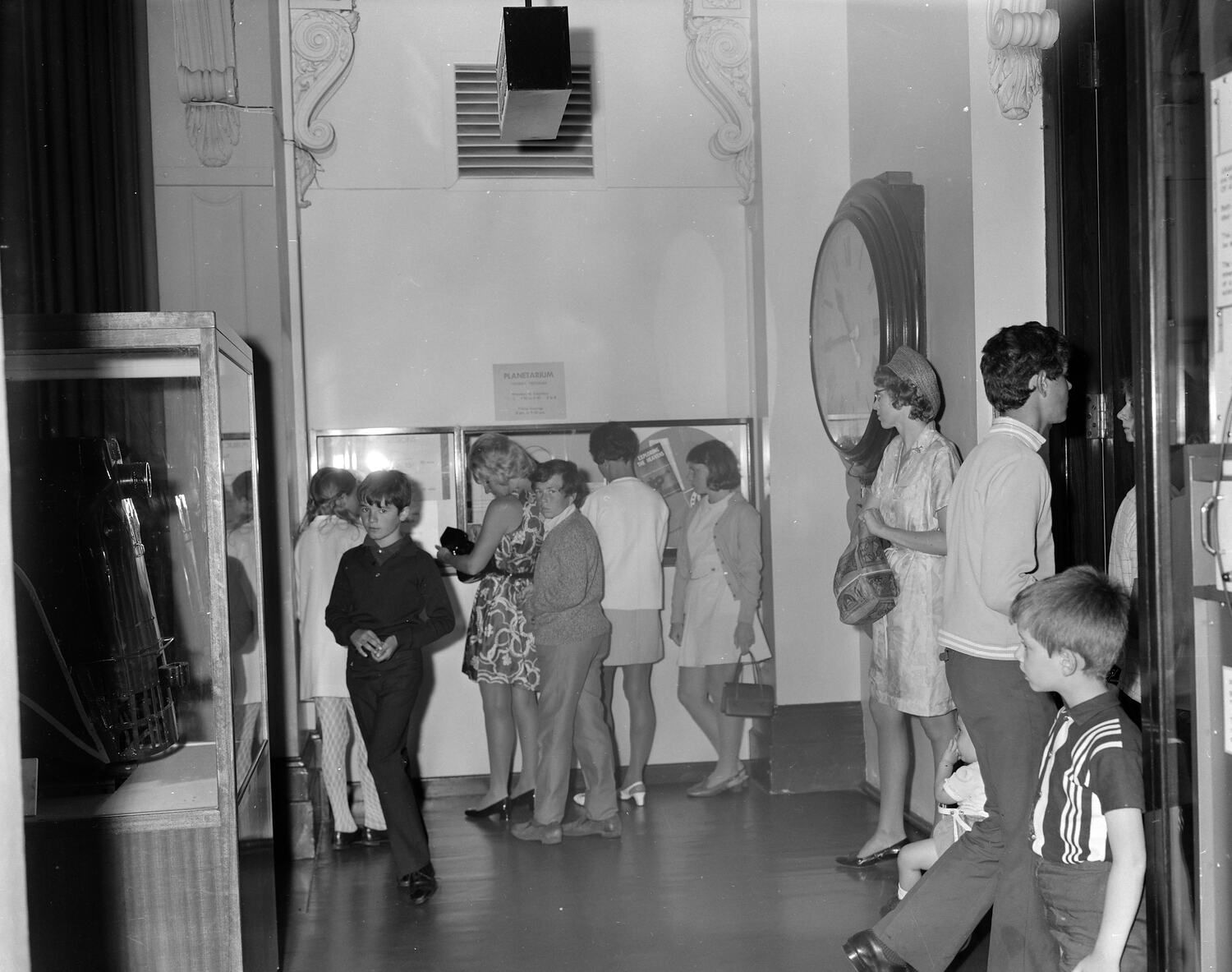
Over three decades later, the venue’s final days included a Sunday afternoon show on 22nd June, 1997 sponsored by the Astronomical Society of Victoria (one of the planetarium’s original stakeholders and long-term supporters). Its final sessions occurred on Sunday, 13th July. The planetarium was then dismantled as the Museum closed ahead of a planned relocation elsewhere in central Melbourne, and the refurbished building was occupied by the State Library of Victoria.
Today, the successor to the Institute of Applied Science, and later Science Museum, is Museums Victoria comprising Melbourne Museum in Carlton Gardens, Immigration Museum in central Melbourne, and Scienceworks in Spotswood which opened in March 1992. The city’s second planetarium, a 155-seat digital venue, opened at Scienceworks seven years later on 26th August, 1999. As a state asset the H V McKay’s decommissioned GOTO projector remains in Museums Victoria’s heritage collection as a superb example of precision engineering in support of public interest and understanding of science in a pre-digital era. Electro-mechanical optical projectors such as GOTO (or Zeiss dating from 1924) have been in use around the word for a century, and despite the advent of the digital age, some remain is use today in planetariums either as stand alone or in hybrid mechanical-digital systems.
For 32 years the H V McKay Planetarium was a popular attraction for school excursions and general visitors. It ran around 30,000 sessions catering to over 2 million visitors.9 As a ‘star theatre’ bringing the night sky indoors and making astronomy accessible to all, it provided information, entertainment and education to satisfy a heightened interest in astronomy and space exploration. This planetarium success story, this project to satisfy a public thirst for knowledge, began in Melbourne sixty years ago this month.
Notes
- Warren Perry, The Science Museum of Victoria: A History of its First Hundred Years, Melbourne, Science Museum of Victoria, 1972, pp.145-149. Interested parties listed were Astronomical Society of Victoria, Royal Society of Victoria, University of Melbourne, Royal Melbourne Technical College, CSIRO, Melbourne Rotary Club, Department of Education, Melbourne City Council, local branch of the British Astronomical Association, and a reference to “the armed forces”. See also J L Perdrix, ‘A Planetarium for Melbourne’, Journal of the Astronomical Society of Victoria, vol. 13, no. 2, April 1960, pp. 20-25.
- G Friend, ‘Planetarium’s sky is fibreglass’, Australian Civil Engineering, vol. 8, no. 10, 5 October 1967, pp. 33-35.
- Ron Cavill, ‘The Sky Indoors: Melbourne’s H V McKay Planetarium’, The Educational Magazine, vol. 25, no. 2, March 1968, pp. 56-61. And as R A Cavill, ‘Melbourne’s H V McKay Planetarium’, Journal of the Astronomical Society of Victoria, reprint, December 1968.
- ‘Official Opening of H V McKay Planetarium’, leaflet, Institute of Applied Science, Melbourne, 2 December 1965. And ‘Planetarium Finance’, Institute of Applied Science, Melbourne, 6 May 1965.
- ‘Proposed Planetarium’, Design Drawing 70/10/2, Department of Public Works, Melbourne, 2 May 1962.
- GOTO-Planetarium: The Medium Size Model M-1, Tokyo, GOTO Optical Mfg Co, n.d., p16. And ‘Planetarium Inventory’, Institute of Applied Science, Melbourne, 1965.
- ‘H V McKay Melbourne Planetarium Supplementary Information’, Institute of Applied Science, Melbourne, n.d., likely November 1965.
- F J Kendall, ‘Details concerning financial arrangements for the Planetarium’, Institute of Applied Science, Melbourne, 26 November 1965, 3 pp.
- A brief history of the H V McKay Planetarium’, Museums Victoria, Melbourne, n.d., 2 pp.